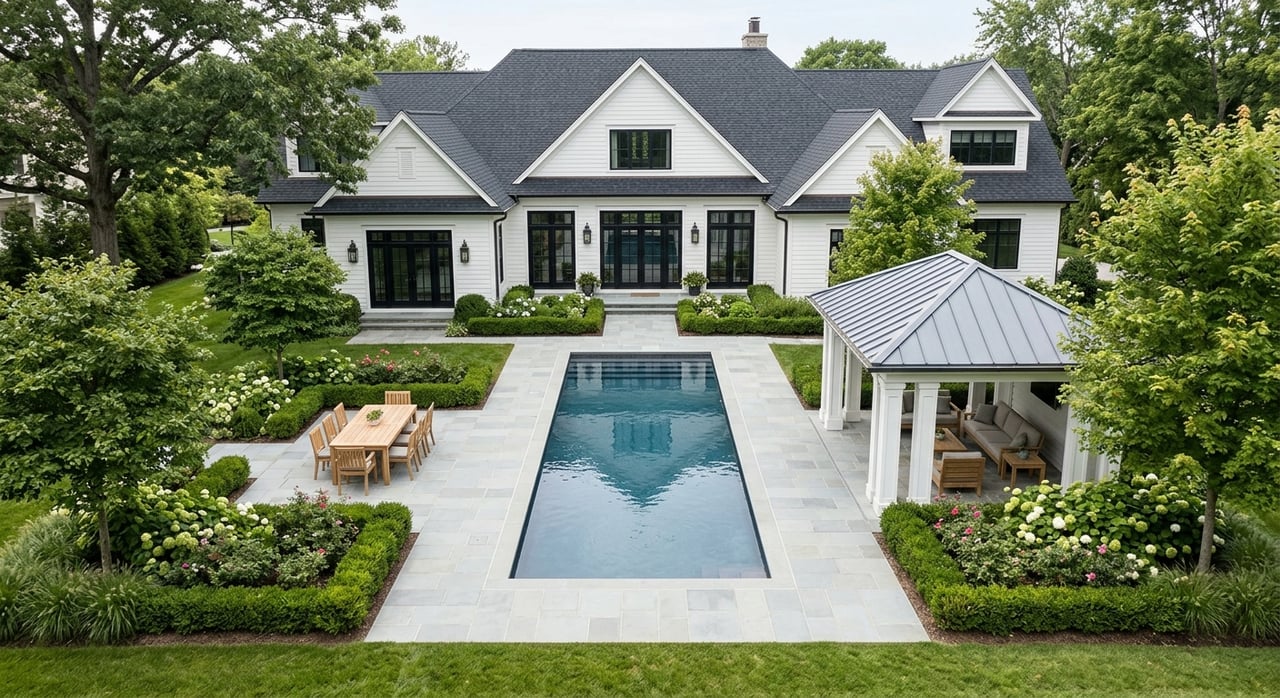
If you already own homes in more than one market, you know one address rarely does everything. Some properties are for access, some are for lifestyle, and some become the long-term anchor that steadies the whole portfolio. In Greenwich, that distinction matters because this is less a generic suburb and more a highly segmented, high-value market tied closely to New York City while offering a very different day-to-day experience. This guide will help you think through where a Greenwich home fits in a multi-city portfolio, what local market behavior suggests, and which planning questions deserve attention before you move. Let’s dive in.
Why Greenwich works differently
Greenwich often enters a portfolio as an anchor home, legacy asset, or seasonal base rather than as a simple commuter purchase. Census data show a town of 64,801 residents, a 70.0% owner-occupied housing rate, a median household income of $206,130, and a median owner-occupied home value of $1,695,700. That profile points to a market shaped by long-term ownership and substantial household resources.
For multi-city households, connection matters as much as setting. Greenwich station sits on Metro-North’s New Haven Line, with direct service to Grand Central and other Fairfield County stops. That makes it practical to split time between Greenwich and New York City without giving up the feel of a residential coastal town.
Greenwich also has a broader international and multilingual profile than many towns of similar size. Census data show 22.5% of residents were foreign-born and 25.1% spoke a language other than English at home. For globally mobile buyers, that can make Greenwich feel more naturally aligned with a portfolio that already spans cities, countries, or both.
Start with the role in your portfolio
Before you compare properties, define the job the home needs to do. In a multi-city portfolio, the same town can make sense for very different reasons depending on your timeline, lifestyle, and liquidity goals.
A Greenwich property often fits one of three roles:
- Anchor home: your primary long-term base with strong day-to-day livability and easy access to New York City
- Secondary base: a residence used part of the year for work, family, or convenience
- Legacy holding: a longer-view asset intended for extended ownership, family use, or estate planning coordination
That first decision shapes nearly everything that follows. A buyer seeking an anchor home may prioritize consistent use, commuting ease, and year-round function, while a legacy buyer may focus more on property type, holding horizon, and how the asset works alongside trusts, title structure, and broader estate plans.
Greenwich is not one market
One of the biggest mistakes portfolio buyers make is treating Greenwich like a single, uniform market. It is not. Pricing, pace, and likely buyer pools vary meaningfully by micro-location and by property type.
Realtor.com data show a wide spread across local areas. Mid Country West had a median listing price of $10.95 million, while Chickahominy was listed at $1.2745 million. Days on market also varied sharply, from 21 days in Mid Country East to 91 days in Chickahominy.
That matters because your exit strategy is tied to where you buy, not just the Greenwich name. A property in one segment may appeal to a narrow, highly capitalized buyer pool, while another may serve a broader slice of the market. If you are fitting Greenwich into a larger portfolio, micro-market selection is part of risk management.
What current liquidity really tells you
Greenwich is active, but liquidity is highly segment-specific. According to the Greenwich Association of REALTORS®, 2025 year-end single-family sales totaled 503 transactions, with a median sale price of $3.15 million, 70 average days on market, and 651 new single-family listings. Condo and co-op sales were softer, with 174 transactions and a $960,000 median sale price.
Inventory remained tight into 2026. In April 2026, single-family inventory fell to 99 units, down 38.1% year over year, and condo/co-op inventory fell to 32 units, down 28.9% year over year. Limited supply supports the idea that Greenwich continues to attract serious demand, but not every segment moves at the same speed.
Public sources use different methods, so numbers do not always line up perfectly. Redfin described Greenwich as somewhat competitive in April 2026, with a median sale price of $2,173,877, a 30-day median time on market, and a 102.9% sale-to-list ratio. Realtor.com called it a balanced market in March 2026, with 184 homes for sale, a $3.595 million median listing price, a $5,500 median rent, and a 28-day median time on market.
The shared takeaway is more important than the exact data point. Greenwich is a high-priced market with active demand and limited supply, and your likely liquidity depends heavily on price band, property type, and location within town.
How Greenwich compares to the county
For portfolio planning, it helps to understand just how distinct Greenwich is from the broader surrounding market. Redfin reported Fairfield County’s April 2026 median sale price at $690,072, compared with $2,173,877 in Greenwich. In simple terms, Greenwich was trading at roughly three times the county median.
That gap helps explain why Greenwich belongs in a different planning bucket than a typical suburban purchase. The buyer pool is narrower, more capitalized, and often motivated by a mix of lifestyle, access, and long-term positioning. If you already own in other major markets, that may be exactly the point.
The ultra-luxury layer matters
Greenwich also has true ultra-luxury depth, which is not the case in every affluent town. Realtor.com reported that the first-half 2025 median sales price reached $2.9 million, the highest first-half level on record dating back to 2001. It also reported that 25 homes priced at $10 million or more had sold in 2025 at the time of reporting.
For multi-city owners, that creates an important distinction. In Greenwich, a home can function both as a place to live and as a property in a market where trophy assets still transact. That does not remove risk, but it does mean the town can support both practical and aspirational ownership goals.
Lifestyle value is part of the equation
A multi-city portfolio is not only about pricing and resale. It is also about what each home adds to your life. Greenwich offers an unusually wide range of recreational and seasonal-use options for a town of its size.
Town facilities include Greenwich Point Park, a 147.3-acre beach and recreation facility in Old Greenwich. Byram Park includes a beach, pool, boat club, marina, and boat launch. Island Beach and Great Captain Island are reached by ferry, and the town also has three marinas plus a boat yard.
That gives Greenwich a different kind of portfolio utility. Depending on the property and location, a home here may serve as a coastal base for boating, family gatherings, summer use, or year-round living with easy access to both water and rail. When buyers talk about diversification, lifestyle diversification is often just as important as market diversification.
Model carrying costs carefully
A Greenwich purchase should be evaluated with carrying costs in mind, especially if you already own in multiple jurisdictions. The town completed its 2025 revaluation, with new assessments reflecting 70% of fair market value as of October 1, 2025 and becoming effective on the July 1, 2026 tax bill.
Greenwich also explains that the Board of Estimate and Taxation sets the mill rate each May. Property tax is calculated by multiplying assessed value by the mill rate and dividing by 1,000. For a portfolio buyer, the key point is not to memorize the formula, but to understand that carrying costs can change and should be modeled with care.
This is especially important when your real estate footprint spans several cities or states. Purchase timing, sale timing, title structure, residency planning, and trust or estate considerations may all need to be aligned before you make a move. The more complex the portfolio, the more valuable senior-level coordination becomes.
A practical framework for decision-making
If you are considering Greenwich as part of a broader portfolio, these are the questions worth answering early:
- What role will the property play? Is this your anchor home, a secondary base, or a long-view legacy holding?
- Which micro-market fits the goal? The right area for lifestyle may not be the same as the right area for liquidity.
- How important is New York access? Direct Metro-North service can be central to how the property functions.
- How much does coastal use matter? Beaches, marinas, boating access, and seasonal recreation can meaningfully change value to your household.
- Have your advisers been aligned? Tax, legal, and ownership structure questions should be discussed before a major acquisition or sale.
These are not abstract planning points. They affect how comfortably the home fits with the rest of what you own, how often you will use it, and how well it supports your long-term goals.
Why senior-led guidance matters here
In a market like Greenwich, the right advice goes beyond touring homes and reviewing comparables. You need a clear read on how village, price tier, property type, and timing intersect. You also need a calm process that can coordinate with the realities of owning elsewhere.
That is where a boutique, senior-led approach can make a meaningful difference. For high-value decisions, financial rigor, discreet communication, and continuity of advice are not luxuries. They are part of reducing friction and making better choices.
If you are weighing how a Greenwich home fits into a broader real estate strategy, Charles Paternina offers private, senior-level guidance grounded in local market knowledge, cross-market coordination, and a relationship-first approach.
FAQs
What does a Greenwich home usually represent in a multi-city portfolio?
- A Greenwich home often serves as an anchor residence, a secondary base near New York City, or a long-term legacy holding rather than a routine suburban purchase.
How connected is Greenwich to New York City for regular travel?
- Greenwich station is on Metro-North’s New Haven Line, which provides direct service to Grand Central and supports regular travel between Greenwich and New York City.
How much do Greenwich home prices vary within town?
- Prices vary widely by micro-location. Research cited median listing prices from $1.2745 million in Chickahominy to $10.95 million in Mid Country West, with major differences in days on market as well.
Is Greenwich a liquid market for luxury homes?
- Greenwich shows active demand and limited supply, but liquidity is highly segment-specific and depends on property type, price band, and location within town.
What should buyers review before adding Greenwich to a multi-city portfolio?
- You should review the home’s role in your portfolio, likely carrying costs, commuting needs, lifestyle priorities, and how tax, legal, and ownership advisers should be aligned before a transaction.