Architecture is more than a façade in Greenwich. It shapes how you live day to day, how sunlight moves through your rooms, what upkeep will look like over time, and how well a property holds value when you are ready to sell. If you are comparing homes across town, style is a helpful lens to focus your search.
In this guide, you will learn how four defining Greenwich styles work in practice: Classic Colonials, Shingle-style coastal homes, modern farmhouses, and contemporary glass-forward builds. You will see where each tends to cluster, how floor plans and daylight feel inside, what maintenance to expect, and which approvals or risks might affect renovations. Let’s dive in.
Greenwich at a glance
Greenwich is a historically layered, high-value market with distinct hamlets where architecture reflects setting and lot size. Downtown Greenwich, Riverside, Old Greenwich, Cos Cob, Belle Haven, and the Backcountry each carry a different rhythm shaped by topography and proximity to Long Island Sound. To understand how this evolved, the Greenwich Historical Society offers helpful context.
With typical home values in the multi-million-dollar range, you will see a mix of preserved classics, sophisticated renovations, and new custom construction. Neighborhood-level pricing varies widely, so it pays to evaluate style in the context of location and lot.
Greenwich also maintains active oversight for historic properties. If a home sits in a designated district or historic overlay, proposed exterior changes go through the Town’s Historic District Commission. Reviewing the Commission’s procedures and approvals can clarify what is feasible before you renovate.
Classic Colonials
How to recognize them
Classic Colonial and Colonial Revival homes emphasize symmetry and proportion. You will often see a centered front door with a pediment or small porch, multi-pane double-hung windows with shutters, and gabled or hipped roofs. Exteriors are usually brick or painted clapboard, and the street presence feels formal and balanced.
Floor plan and natural light
Expect a center-hall layout with formal living and dining rooms at the front and bedrooms upstairs. Many Greenwich Colonials have been reworked to open the kitchen into a family room while keeping a formal parlor for entertaining. Natural light typically arrives through traditional window sizes, sometimes complemented by sunrooms or larger openings at the rear to brighten renovated kitchen-family spaces.
Where you find them in town
Colonials are a staple on tree-lined streets in central Greenwich and in Riverside. The style suits neighborhoods with a traditional rhythm and established lots, and it tends to photograph beautifully thanks to orderly façades and mature landscaping.
Practical notes and approvals
- Brick and stone components are low-maintenance in the near term, but mortar joints age over decades. Budget for periodic repointing as a long-term capital item, a reality many owners overlook until it is time to address it. Guidance on typical repointing cycles can be found in contractor resources such as this overview of tuckpointing timelines.
- If a Colonial lies within a local historic district or overlay, exterior changes may require a Certificate of Appropriateness. Confirm status early with the Historic District Commission so you understand constraints and timeline.
Shingle-style and coastal “New England” houses
Signature exterior cues
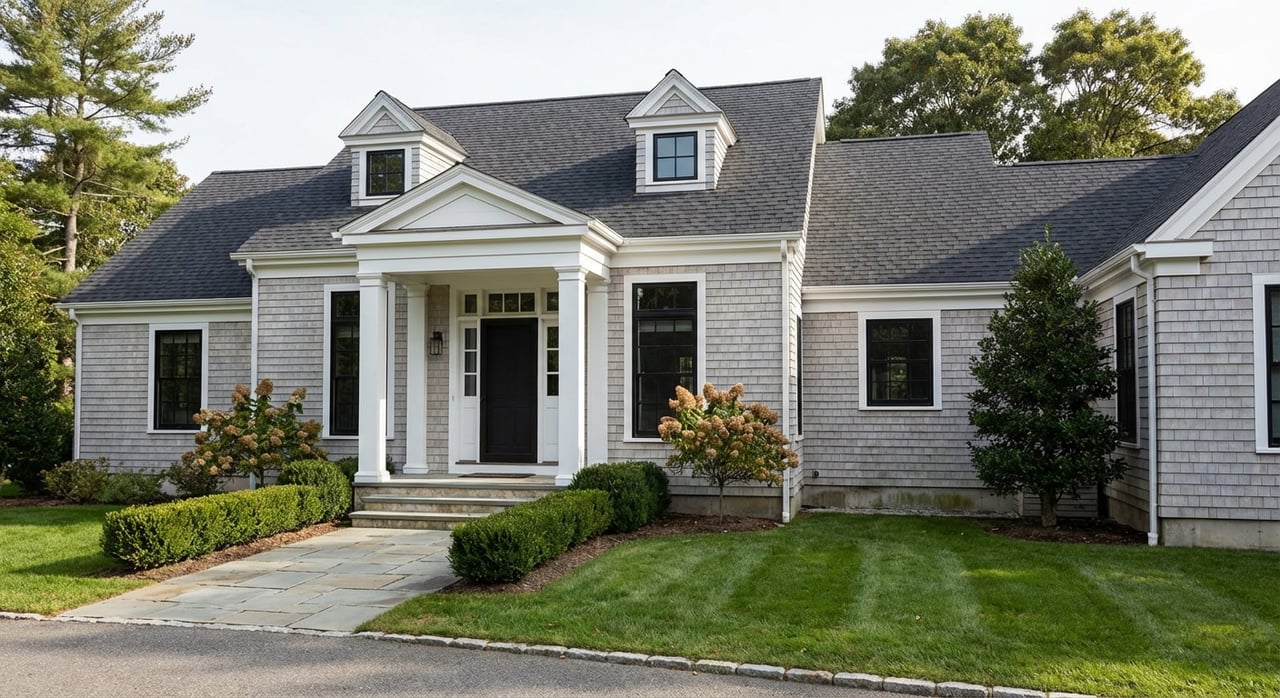
Shingle-style homes wrap walls and sometimes roofs in continuous wood shingles that read as one enveloping mass. The massing is usually asymmetrical with sweeping rooflines, dormers, and broad porches. This late 19th-century coastal idiom was designed to sit comfortably near the water. The state historic-preservation guide to Shingle Style offers a concise visual primer.
Floor plan, views, and light
Layouts are informal and flowing, often oriented to capture coastal views and breezes. Porches and piazzas extend living outdoors. On the view side, you will often see grouped or broader windows; on the street side, the façade can feel more sheltered. The result is a calm, connected interior with strong indoor-outdoor continuity.
Where they cluster in Greenwich
You will see many Shingle-style and cedar-shake-clad homes in Belle Haven and Old Greenwich, where proximity to Long Island Sound makes this coastal language feel at home. Properties in these enclaves tend to highlight porches, water-facing rooms, and relaxed entertaining zones.
Cedar maintenance and longevity
Cedar shingles are admired for authenticity and weathering near the coast, but they require a cadence of care. The Cedar Shake & Shingle Bureau outlines best practices for inspections, cleaning, and refinishing intervals that commonly fall every 3 to 7 years depending on exposure. Reviewing the Bureau’s maintenance guidance helps you plan realistic upkeep.
Local coverage also underscores cedar’s appeal as a Greenwich signature look while noting the importance of maintenance. For a sense of the material’s role in high-end design, see this Greenwich Time feature on cedar-shake siding.
Modern farmhouses
Exterior language
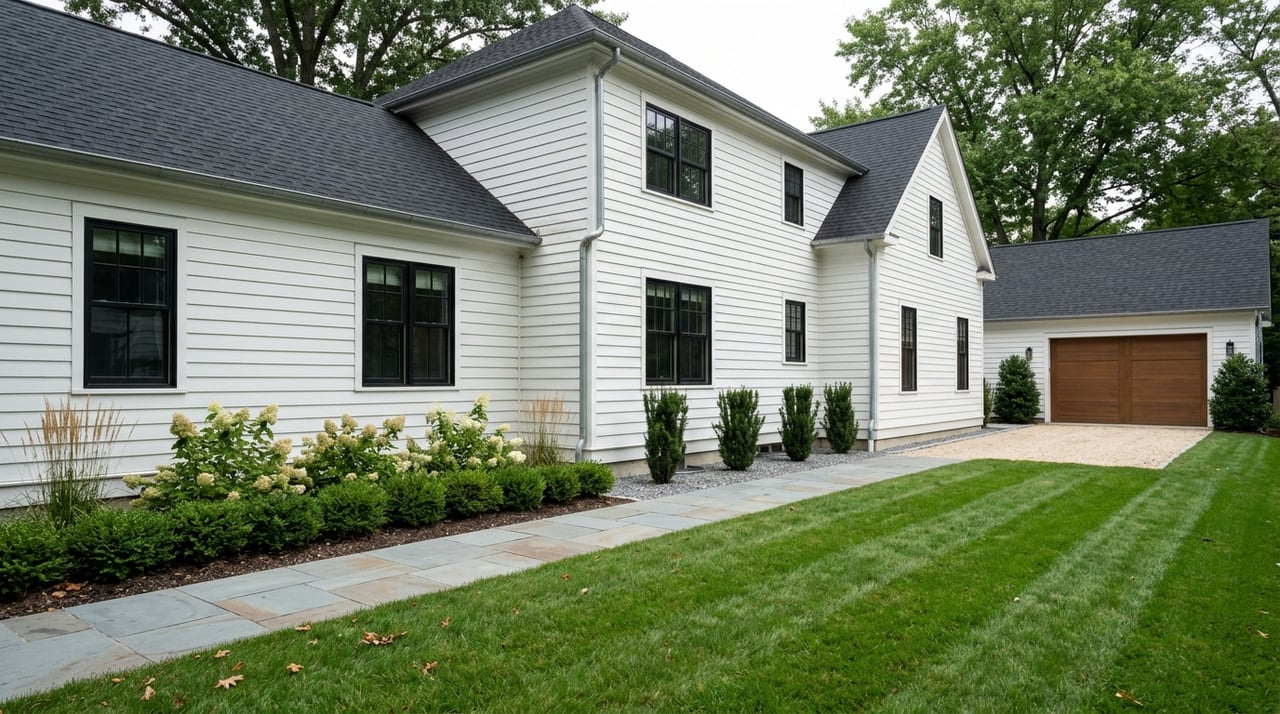
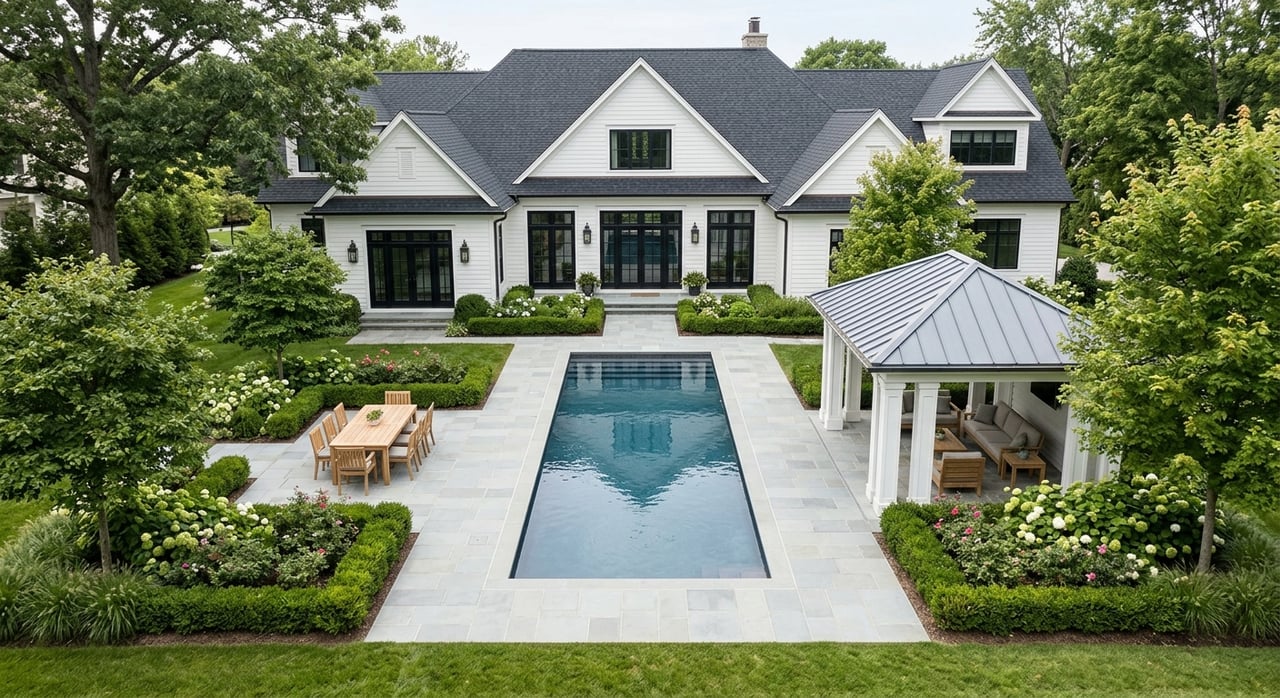
Today’s modern farmhouse blends clean gable forms with board-and-batten or clapboard siding, black-trim windows, and a neutral palette. Covered porches and honest materials give a crisp, comfortable look that photographs bright and current.
Floor plan and daylight
Interiors usually center on an open kitchen–family hub, often with a vaulted or double-height family space. Large windows, sliders, and thoughtful sightlines create easy flow to patios and lawns. Practical elements like a mudroom, flexible office or guest suite, and a walk-in pantry are common.
Where you see them in Greenwich
Newer modern farmhouses appear on larger parcels in Banksville and the Backcountry, and as infill builds in several hamlets. For a local reference point, recent features have highlighted turnkey examples in Banksville that showcase the form and finishes buyers expect in this category, as seen in a Greenwich Time spotlight on a modern farmhouse.
Practical notes
- Painted wood exteriors look crisp but benefit from regular inspections and a sensible repaint cycle tied to exposure. Factor that into long-term planning and ask for any recent exterior maintenance records during diligence.
- If a farmhouse sits near a historic area, verify whether any local district or overlay touches the property so you understand approval steps for future changes.
Contemporary and glass-forward luxury
What to expect outside
Contemporary homes in Greenwich favor rectilinear or sculptural forms, expanses of glass, and a curated mix of modern materials like steel, stone, and metal accents. Many are sited for specific sightlines rather than a historic street pattern. For a visual feel, see a custom commission like this contemporary residence profiled by a local architecture firm.
How they live inside
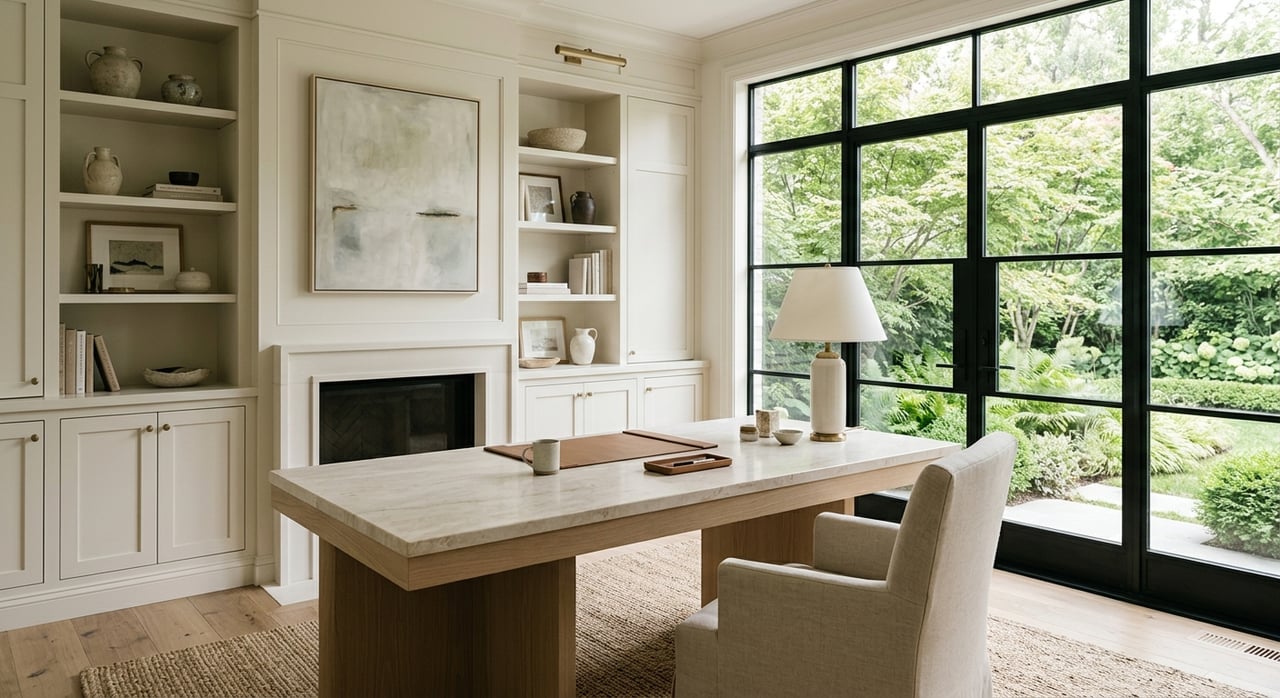
Open, volumetric interiors and long sightlines create dramatic transparency. Floor-to-ceiling glazing brings in abundant daylight and often connects directly to terraces and decks that function as outdoor rooms. High-performance glass and integrated shading become part of the comfort strategy, especially in rooms with large exposures.
Where they fit in Greenwich
You will find these homes scattered on larger or more private sites in the Backcountry and on hillside parcels where privacy and views support the aesthetic. Buyer interest runs deep but focused, often led by those who want a distinctly modern experience.
Glass, comfort, and upkeep
Large panes and multi-panel systems offer extraordinary views but introduce practical considerations. Professional window cleaning, the risk of seal failure in insulated units over time, and HVAC load management are part of ownership. It helps to note energy-related specs such as low-E or argon-filled glass and whether shades are motorized. For background on glazing performance terms, this manufacturer’s explainer on window technology is useful.
Style, light, and livability: choosing what fits you
Each style delivers light and flow differently. Colonials begin with more compartmentalized plans, but many now blend a formal front with an open kitchen–family zone. Shingle-style and contemporary homes orient rooms to views, yet one uses layered porches and grouped windows while the other relies on expansive panes and minimal frames. Modern farmhouses chase volume and casual connectivity with vaulted family rooms.
As you compare homes, translate listing language into specifics you can feel in a walkthrough. Instead of “lots of light,” look for details like window types, ceiling heights, and room orientation. On a plan, south-facing rooms with picture windows or clerestories will read very differently from east-facing spaces with traditional double-hung windows.
A quick checklist can focus your tour:
- Daylight: Note room orientation and window types. Are there skylights, clerestories, or double-height spaces?
- Flow: Is there a true kitchen–family hub, and do you still have a quiet formal room if you need it?
- Outdoor connection: How easily do you step from main living areas to a porch, terrace, or lawn?
- Maintenance profile: What is the primary cladding, and what upkeep cadence does it imply?
- Systems: For glass-heavy homes, ask about glazing specs and shading. For masonry, ask about repointing history.
Regulatory and risk factors that matter
Historic districts and overlays
Local designation changes what you can do to a façade or addition. If a property appears historic or sits in a known district, review the Historic District Commission’s guidelines and process before committing to a renovation scope. Certificates of Appropriateness, material choices, and review timelines can influence both cost and schedule.
Flood mapping and coastal insurance
Coastal properties may lie within FEMA flood zones or adjacent risk areas, which can affect design, approvals, and insurance premiums. To ground your diligence, consult the Connecticut FEMA DFIRM resources for Fairfield County and confirm the latest map status. Also ask how recent federal rating changes factor into a specific address.
Resale outlook in Greenwich
Resale performance depends on location, condition, and how well a home’s style aligns with its setting. Coastal Shingle-style houses near Long Island Sound remain perennially desirable. Classic Colonials hold broad appeal in traditional neighborhoods. Modern farmhouses meet strong demand from buyers who want bright, turnkey family living. Avant-garde contemporary designs serve a narrower but committed pool that values design distinction.
Across styles, buyers consistently prize open, flexible spaces, abundant natural light, and updated kitchens and baths. Mudrooms and dedicated office or guest suites remain practical wins. If a home’s bones are strong, targeted updates to lighting, glazing, and kitchen-family flow can lift both livability and long-term value.
How we help you evaluate design fit
Architecture is part aesthetics and part strategy. Our role is to help you translate style into lived experience, cost, and exit value. We analyze how a plan fits your routines, where daylight supports comfort, which materials will demand attention, and how approvals or risks may influence future changes. For sellers, we craft narrative-driven marketing that highlights concrete features buyers care about, not vague superlatives.
If you are weighing homes across Greenwich’s villages, or considering how to prepare your property for market, let’s talk. Request a discreet, senior-led consultation with Charles Paternina to align design, numbers, and next steps.
FAQs
What defines a Classic Colonial in Greenwich?
- A symmetrical façade with a centered entry, multi-pane double-hung windows, and brick or clapboard exteriors. Inside, expect a center-hall plan, often updated with an open kitchen–family room while retaining a formal front parlor.
How much upkeep do cedar-shingle exteriors need near the coast?
- Plan for annual inspections and cleaning, with refinishing or re-treatment commonly every 3 to 7 years depending on exposure; see the Cedar Shake & Shingle Bureau’s maintenance guidance for best practices.
Do large glass walls raise energy or maintenance needs?
- They deliver exceptional daylight and views but can increase cleaning frequency and HVAC loads if glazing is not high-performance; ask about low-E or argon-filled units and integrated shading, and review resources like this window technology explainer.
What should I check before renovating a historic home in Greenwich?
- Confirm whether the property sits in a local historic district or overlay and consult the Historic District Commission’s process; exterior changes may need a Certificate of Appropriateness that affects scope and timing.
Where are Shingle-style homes most common in Greenwich?
- You will often find them in coastal neighborhoods such as Belle Haven and Old Greenwich, where porches, cedar shingles, and view-oriented rooms align with the setting.
How do modern farmhouses typically live compared with older homes?
- They usually offer an open kitchen–family hub with generous windows and sometimes vaulted ceilings, plus practical spaces like a mudroom and flexible office or guest suite for everyday convenience.